
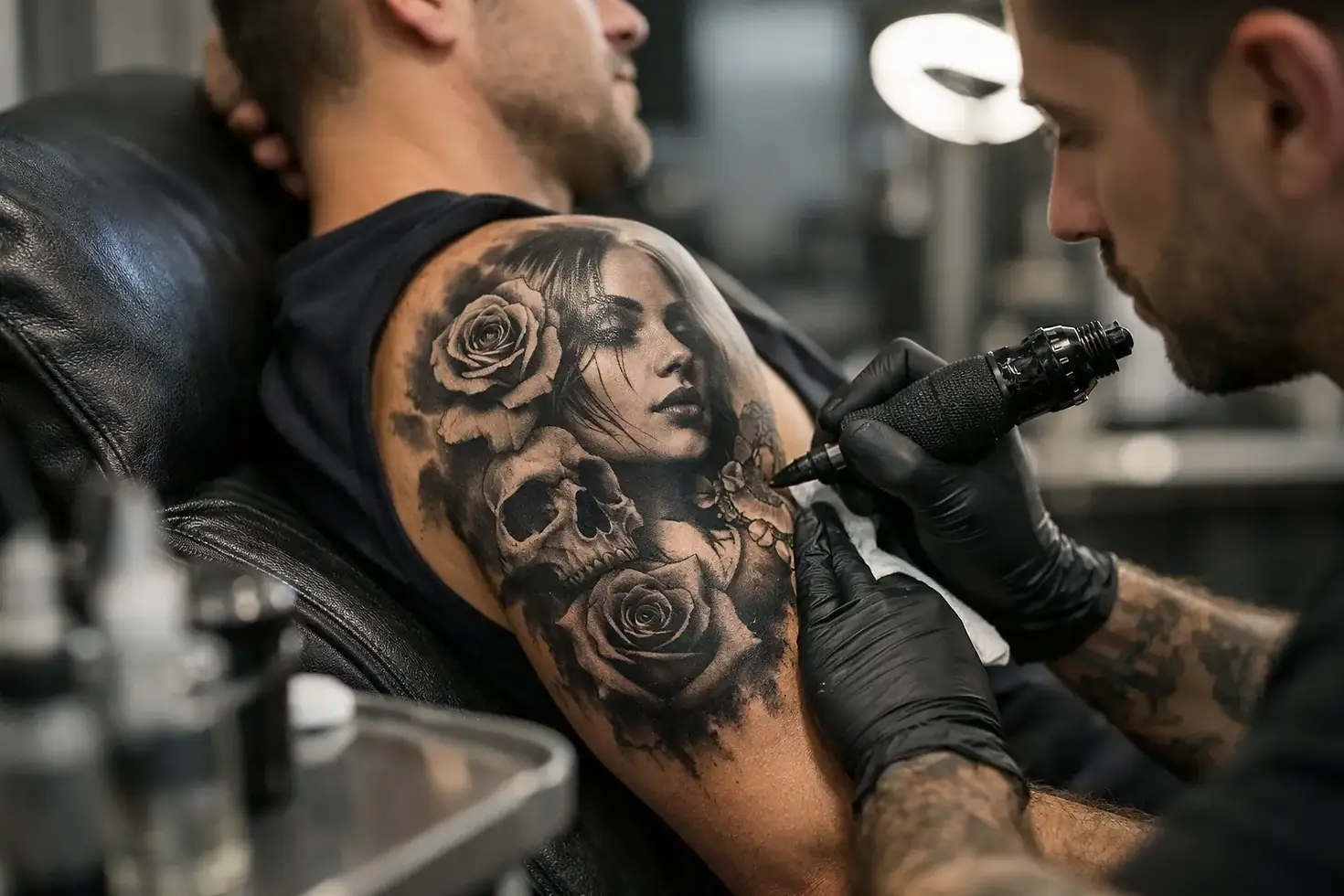
Black and Grey Tattoo: What to Expect
- Georgi Petrov
- 1 apr
- 6 minuten om te lezen

A great black and grey tattoo does not rely on color to get attention. It relies on contrast, depth, clean design, and an artist who knows how to make soft shading hold up over time. That is exactly why this style can look understated on one person and incredibly powerful on another.
For some clients, black and grey is the obvious choice because it feels timeless. For others, it is the better fit because they want realism, subtle detail, or a piece that sits naturally with their skin tone and wardrobe. Either way, this is not a "safer" version of tattooing. When it is done well, it is one of the most technical styles in the studio.
Why a black and grey tattoo stays popular
Black and grey has range. It can be soft and minimal, bold and dramatic, or highly detailed and realistic. That flexibility is a big reason people come back to it again and again.
Portraits, religious imagery, statues, animals, floral work, script, Chicano-inspired designs, and custom storytelling pieces all sit naturally in black and grey. The style can feel classic without looking dated. It also tends to age gracefully when the design has the right contrast and the tattoo is placed well.
There is also a practical side. Some clients simply do not want bright color. They want something refined, easier to wear visually, and more focused on shape, light, and shadow. Black and grey gives you that.
What makes black and grey tattooing different
A lot of people assume black and grey just means "using black ink only." The reality is more precise than that. The look comes from different values - deep blacks, mid tones, and soft washes - arranged in a way that creates dimension.
That means the artist is not just drawing a design. They are building contrast. If the darkest areas are too heavy, the tattoo can feel muddy. If everything is too light, it may heal flat and lose impact. Good black and grey work depends on balance.
This is especially true in realism and fine detail. Smooth shading sounds simple until you see what happens when transitions are uneven or the design has no breathing room. Small technical decisions matter a lot in this style.
Linework, shading, and contrast
Some black and grey tattoos use strong linework. Others rely more on soft edges and gradual shading. Neither is automatically better. It depends on the design, the placement, and how you want the tattoo to read from a distance.
If you want a piece that stays readable for years, contrast matters more than many first-time clients expect. Skin is not paper. Tiny details can soften as the tattoo settles and ages. A design needs enough structure to remain clear, not just look good in a fresh photo.
Skin tone matters
Black and grey can work beautifully across different skin tones, but the approach should be adjusted. Lighter skin may show softer value shifts more easily. Richer skin tones can create a striking result too, especially when the design uses strong contrast and smart placement.
This is where custom work matters. The same reference image should not be copied onto every client without considering how it will actually heal in their skin.
Choosing the right design for a black and grey tattoo
The best black and grey tattoos are not picked only because they looked good on someone else. They are designed for your anatomy, your taste, and how much detail the piece truly needs.
If you are thinking about a sleeve, chest piece, forearm tattoo, or leg composition, flow becomes important. A tattoo should move with the body, not sit on it like a sticker. If the design tells a personal story, that story still needs visual hierarchy. Not every idea should compete for attention at the same strength.
For smaller tattoos, restraint helps. A compact black and grey piece can look elegant, but only if the detail level matches the available space. Trying to squeeze too much realism into a tiny area usually leads to disappointment.
What to expect during the consultation
This is where a lot of the quality is decided. A proper consultation should cover more than size and price. It should clarify your idea, placement, references, style direction, and whether the design is better suited to bold contrast, softer shading, or a mix of both.
If you are not sure what will work best, that is normal. An artist-led consultation is valuable because it turns a loose idea into something that can actually become a strong tattoo. Sometimes the right advice is to simplify. Sometimes it is to go larger. Sometimes it is to split one concept into multiple sessions so the result has room to breathe.
At Olymp Tattoo, that artist-first process matters because custom work is not about rushing people into a design. It is about building something that feels personal and looks right long after the appointment.
Does black and grey heal better than color?
Not exactly. It depends on the technique, placement, aftercare, your skin, and how the tattoo was designed.
Black and grey tattoos often look softer and more natural as they heal, which makes some people feel they age better than color. In many cases, they do hold up beautifully. But that does not mean every black and grey tattoo will stay crisp forever without care.
Areas with a lot of movement or friction can fade faster. Very light grey washes may soften more noticeably over time. Sun exposure also makes a difference. If longevity matters to you, this is worth discussing before the stencil goes on.
Healing and aftercare
A black and grey tattoo still needs proper aftercare. Keep it clean, avoid over-moisturizing, do not pick at flaking skin, and protect it from the sun once healed. The basics are not glamorous, but they matter.
Clients sometimes focus heavily on the appointment and forget that healing is part of the result. A beautifully applied tattoo can still heal poorly if aftercare is ignored.
Pain, session time, and pricing
Pain varies more by placement than by style alone. Ribs, sternum, hands, elbows, and knees usually feel more intense than outer arm or thigh placements. Black and grey shading can feel different from heavy linework, but most people find it manageable when they are well rested and prepared.
Session length depends on complexity. A simple script or small symbolic design may be done in one sitting. A realistic forearm piece or larger composition can take several hours or multiple appointments.
Pricing also depends on size, detail, placement, and design complexity. Cheap tattooing often becomes expensive later when cover-ups or corrections are needed. That does not mean the highest price is always the best choice. It means you should look for value in craftsmanship, hygiene, communication, and a portfolio that actually matches the style you want.
How to choose the right artist for a black and grey tattoo
This is the decision that shapes everything else. Look at healed work when possible, not just fresh tattoos under perfect lighting. Pay attention to smooth shading, readable contrast, clean composition, and whether the artist can handle the type of subject matter you want.
If you want realism, check realism. If you want fineline black and grey, check that specifically. An artist can be talented and still not be the best fit for your project.
You should also pay attention to how the studio makes you feel. A clean environment, clear answers, and a no-pressure consultation matter, especially if it is your first tattoo. Trust is part of the service.
Is black and grey the right choice for you?
If you like subtle depth, timeless design, and tattoos that rely on contrast instead of color, the answer may be yes. If your idea involves portraiture, mood, texture, or a more understated look, black and grey often gives you more visual control.
But it depends on the piece. Some concepts need color to fully come alive. Others become stronger when reduced to black, grey, and skin tone. The best choice is the one that fits the story you want to wear, not the one that happens to be trending.
A good tattoo should still feel right when the excitement settles. If you are considering black and grey, take the time to choose an artist who will guide you honestly, design for your body, and care about the final result as much as you do. That is where the difference shows.


Opmerkingen