
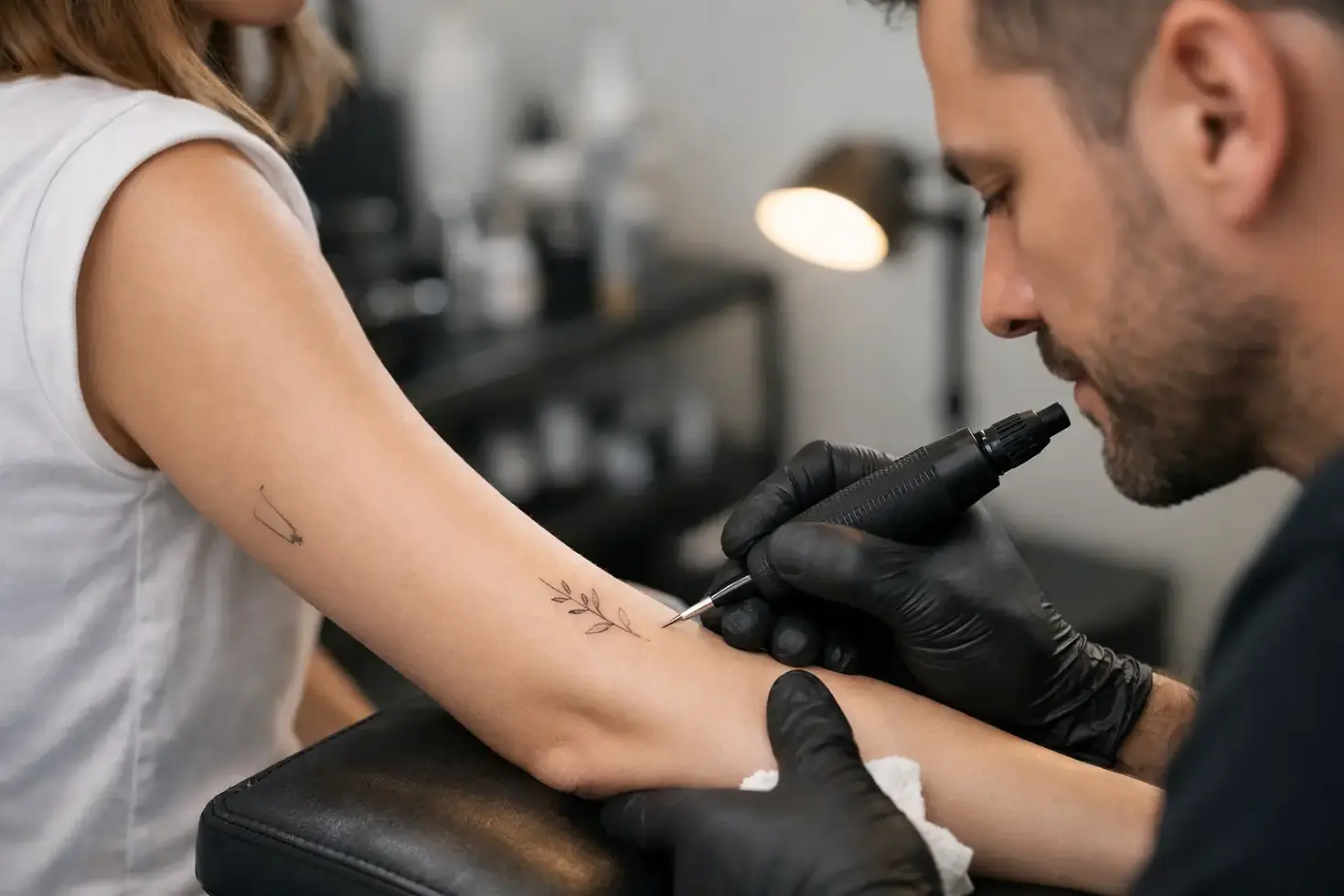
How to Choose a Fineline Tattoo Specialist
- Georgi Petrov
- 28 mrt
- 6 minuten om te lezen

A fineline tattoo specialist can make a small tattoo feel sharp, elegant, and deeply personal - or leave you with lines that blur, fade unevenly, or never quite sit right. That is the reality of this style. Fine line work looks simple from a distance, but it is one of the easiest styles to get wrong.
If you are thinking about delicate lettering, subtle florals, micro realism, tiny symbols, or a clean minimal design, choosing the right artist matters more than choosing the trend. The best fineline tattoos rely on control, consistency, skin knowledge, and honest guidance. Not every good tattoo artist is automatically the right fit for this kind of work.
What a fineline tattoo specialist really does
Fine line tattooing is not just about making a tattoo small. It is about creating crisp detail with intentionally thin lines that still heal well and hold their shape over time. That takes a steady hand, but it also takes restraint. An experienced artist knows when a design needs more breathing room, when a line is too close to another, and when your idea needs to be adjusted so it ages better on skin.
This is where specialization matters. A fineline tattoo specialist understands how pressure, needle choice, placement, and skin texture all affect the final result. They are not only focused on how the tattoo looks fresh on the day you get it. They are thinking about how it will settle, soften, and read a year from now.
That matters even more with subtle tattoos because there is less room for error. In bold traditional work, a slightly heavier line can still suit the piece. In fineline work, one inconsistent pass can change the whole feel of the design.
Why fine line tattoos are harder than they look
Clients often come in with reference images that look airy and almost weightless. The appeal is obvious. Fine line tattoos can feel refined, quiet, and very personal. But the cleaner the look, the more technical the execution needs to be.
Thin lines must be placed with precision. Spacing has to be intentional. Depth has to be controlled. If the artist goes too light, the tattoo may heal patchy. If they go too deep or too hard, the lines can spread more than intended. Skin type also plays a role. Areas with more movement, friction, or texture may not hold ultra-delicate detail as cleanly as smoother placements.
That does not mean you cannot get the tattoo you want. It means a good artist will tell you what works, what needs adapting, and where compromise is smart.
How to judge a fineline tattoo specialist
The portfolio should be your first filter. Not just any portfolio - a portfolio with healed work, clear close-ups, and examples that match the style you actually want. If you want soft botanical linework, a gallery full of bold blackwork is not enough. If you want tiny script, look for script that is legible, balanced, and not overcrowded.
Fresh tattoos can be misleading because almost anything looks crisp right after it is done. Healed examples tell you more. You want to see whether lines stay readable, whether details still make sense, and whether the artist avoids overworking the skin.
Consistency matters more than one perfect photo. A strong fineline tattoo specialist shows control across different pieces, placements, and clients. Their line quality should feel intentional. Their designs should suit the body instead of looking like they were copied and dropped onto skin without thought.
Communication is another sign. The right artist will ask about size, placement, skin tone, sun exposure, and your long-term expectations. They will not promise impossible detail in an area that is too small to support it. Honest advice is a good sign, not a sales obstacle.
Questions worth asking before you book
A consultation should leave you feeling clearer, not pressured. If you are comparing artists, ask how they approach fine line healing, whether they can show healed work, and what changes they would recommend for your design. Ask about placement too. A tattoo on the ribs, fingers, ankle, or inner arm will all behave differently over time.
It is also fair to ask about hygiene, aftercare, and touch-up expectations. Fine line tattoos can need a careful approach both during the session and during healing. A studio that takes cleanliness seriously and explains aftercare in plain language is already showing you how they work.
Pricing is another area where honesty matters. Fine line tattoos may look quick, but precision takes time. Very low pricing can be a warning sign if it means the artist is rushing, underestimating the work, or building around volume instead of quality.
Red flags people overlook
The biggest red flag is a portfolio that relies only on filtered, far-away photos. If you cannot clearly see the linework, you cannot judge the work. Another is an artist who says yes to every idea without discussing scale or longevity. That can feel convenient in the moment, but it often leads to disappointment later.
Be cautious with extremely tiny designs packed with detail. Some concepts simply do not translate well at miniature size. A good artist will simplify where needed so the tattoo remains readable. If someone agrees to tattoo a complicated image at a size that barely fits on a coin, that is not always flexibility - sometimes it is poor judgment.
A rushed consultation is another warning sign. Fine line work benefits from planning. You should feel that the artist cares about the design, the placement, and how it will sit on your body.
Placement and design still matter as much as the artist
Even the best fineline tattoo specialist is working with real skin, not paper. That means placement has a huge effect on the outcome. Hands, fingers, feet, and high-friction areas often heal less predictably. Areas with sun exposure may also fade faster over time. Smoother areas like the forearm, upper arm, thigh, or upper back often give delicate designs a better chance to stay crisp.
Design choice matters too. A minimal branch, a small word, or a clean symbolic piece often ages better than a very intricate micro scene. This is not about lowering your expectations. It is about making smart design decisions so the tattoo still feels beautiful years from now.
That is often where custom work makes the difference. Instead of forcing a copied reference onto the body, a thoughtful artist adjusts scale, detail, and composition for your skin and your idea.
What the right studio experience should feel like
Getting tattooed should feel personal, especially with a style that depends on trust and precision. You want an artist who can listen, guide, and explain without making the process feel intimidating. That is especially important if this is your first tattoo.
A good studio experience is not about hype. It is about feeling comfortable enough to ask questions and confident enough to move forward. Clean setup, clear process, calm communication, and detailed aftercare all matter. They tell you the artist takes both the artwork and your experience seriously.
At a studio like Olymp Tattoo, that one-on-one approach helps clients make better choices from the start. When the artist is directly involved in shaping the concept, the result is usually more personal and more wearable.
Is a fineline tattoo right for you?
Sometimes the answer is yes, immediately. Sometimes the better answer is almost, but with adjustments. If you love subtle tattoos, clean detail, and understated designs, fine line work can be a great fit. If you want something that screams across the room, another style may serve you better.
There is also a middle ground. Many clients want the softness of fine line work with just enough structure to age well. In those cases, slightly stronger lines or a touch more space can make the tattoo more durable without losing the delicate look.
The right artist will not push you into a style that does not suit your idea. They will help you find the version of it that works best.
Choosing a fineline tattoo specialist is really about choosing judgment, not just technique. A beautiful tattoo starts with someone who knows when to refine your idea, when to protect it from bad compromises, and when to tell you the truth. If an artist can offer that kind of care along with strong linework, you are already in a much better place to wear something meaningful for years.


Opmerkingen